Famous preachers, authors and lecturers often visited Wheaton College during the 1930s, but students were particularly delighted when Jay Hanna “Dizzy” Dean visited for a day. Dean, a Major League Baseball pitcher for the St. Louis Cardinals, Chicago Cubs and the St. Louis Browns, was hosted by his friends Coach Fred Walker and Captain Doug Johnston of the campus football team.
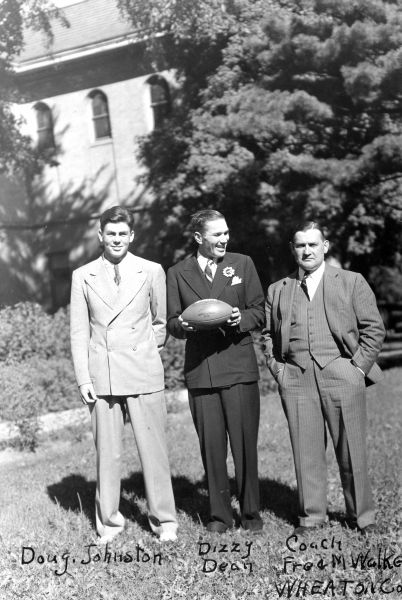
Like Yogi Berra and Bob Uecker, later players-turned-commentators, Dizzy Dean was renowned for his colorful personality as much as his athletic prowess. The following excerpts from the Record, published on September 26, 1936, detail Dean’s visit:
“A great school, I never saw a better spirit anywhere,” drawled Jerome “Dizzy” Dean, famous St. Louis Cardinal baseball pitcher, grinning at the cheers of 1200 Wheaton College students in chapel Monday morning…It was the first time in his life he had ever been in a college chapel, but he declared that the thundering, whole-hearted singing and sincerity of the students gave him “one of the biggest thrills of his life.” He was so impressed that he later told Walker, “From now on, Wheaton College is my college.” His publicized joviality was never more evident than in a walk around the campus escorted by Walker and Johnston. Still limping slightly with a sore shin injured by a line drive the preceding day when he lost to the Cubs in a hectic eighth inning, he commented favorably on the lawns, buildings and athletic field, declaring them “real pretty.”
Dizzy spoke again and again of his admiration for Walker. In his short speech in chapel accepting the football he told how their friendship started when the new Wheaton tutor was coaching a baseball team in Texas where Dean played in his minor league days. “You got a good coach. I know him,” he told the student body, who staged an almost unprecedented demonstration in applauding him. Just before he got into the coach’s automobile to leave for Chicago, the good-natured sportsman shook hands with Johnston.
Dizzy Dean, belying his own wit and keen intuition, describes himself: “The Good Lord was good to me. He gave me a strong right arm, a good body, and a weak mind.” Retiring from playing in the late 1940s, he continued as a successful sports commentator. He was elected to the Baseball Hall of Fame in 1953. He died on July 17, 1974. Wheaton resident Robert Goldsborough in his historical mystery Three Strikes, You’re Dead (2005), featuring series protagonist Snap Malek, police reporter for The Chicago Tribune, uses Dizzy Dean as a character, along with Al Capone and Mayor Richard J. Daley.

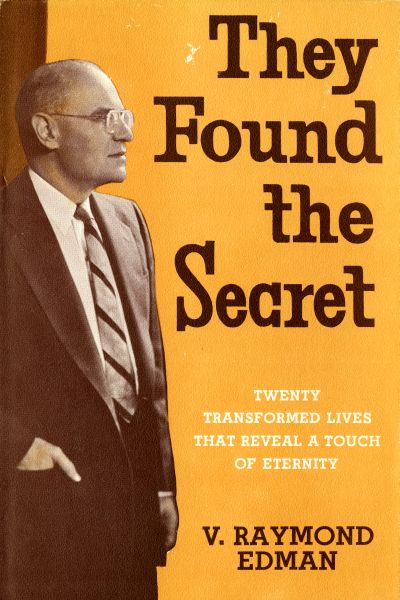 What are the possibilities of the Christian life? To what bold frontiers might our faith aspire? Are a few believers destined for magnificent ministries, while others languish in mediocrity?