Christian Exhortation in the Friendship of Madeleine L’Engle and Marilyn Unruh
All posts by admin
x
x
x
x
The Orange and the Blue
Like any campus, Wheaton College proudly displays its colors. Orange and blue. Visiting, you will encounter orange and blue t-shirts, pennants, banners, posters, jackets, flags, blankets; and, during athletic events, energetic, noisy fans displaying bright orange and blue facepaint. Why these colors?  The origin dates to Jonathan Blanchard, the founder of the school. Historian W. Wyeth Willard writes in Fire on the Prairie – The Story of Wheaton College:
Like his parents and all true New Englanders [Charles Blanchard] was proud of his ancestry. “My father and mother were Vermonters. There can be no better blood; it seems to me, than that of the English Pilgrims and Puritans.” In many of the Blanchards’ published addresses this note comes out time and again, along with mention of Plymouth Rock. But that did not prevent the Blanchards from admiring people of other ancestries. Jonathan wrote concerning the Swedes, “the merging of northern steel with Anglo-Saxon iron.” And he suggested that the College colors be orange and blue — orange after that great Dutch patriot, William of Orange, and blue for loyalty.
Identity
Twenty years ago, the Wheaton Alumni magazine began a series of articles, titled “On My Mind”, in which Wheaton faculty told about their thinking, their research, or their favorite books and people. Former Assistant Professor of New Testament Studies Nancy L. Calvert (who taught at Wheaton from 1990-1997) was featured in the Spring 1996 issue.
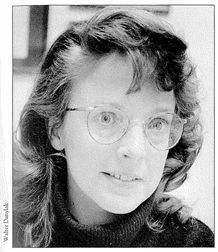 Come late June, I’ll be getting married. It’s a big step, and I’m taking it later in life than most. David, my fiance, and I are glad to have found each other. We sense God’s timing in bringing us together in the midst of our busy lives and careers.
Yet each of us finds that we harbor some fearfulness about joining our lives. We have each established personal and professional identities. Getting married will involve sacrifice–but how much of our respective identities are at stake?
My approaching marriage has prompted me to examine the source of my identity more closely. I imagine that I am not alone when I admit that the person I have become is partially a result of my seeking the approval of others.
By taking on characteristics, however, that are deemed important by another person, or by performing according to someone else’s perceived standard, it is as if you and I believe that we are valued only if we can somehow earn another’s respect and love.
If this approval-based mindset is central to our identity, it can render us oblivious to the wonder of how God created us and to his purpose for our lives. It allows others to gain control of our lives–a control that ultimately belongs to God. In his book, A Pretty Good Person, Lewis Smedes wisely states, “One way to get in control of one’s life is surrender to unconditional love…I have to get back to that surrender now and then or I lose control again to the demon of other people’s approval” (p. 110). If our identity depends on others’ approval and not on God’s unconditional love, chances are that we will never fully discover what makes us able to serve God in our unique way.
Another source of self-identity is our life experiences. Yet at times, our experiences can become like prisons. It may be too threatening to actually discern what in our past shackled us to a certain perception of our world, ourselves, or God. But unless we are willing to name, evaluate, and revise the ways we perceive the world, we cannot freely embrace the life God has so graciously granted us.
In recent years, many scholars have examined the apostle Paul’s call to preach to Gentiles (one example is Krister Stendahl’s Paul Among Jews and Gentiles). In his providence, God gave Paul the background to succeed in his ministry to Gentiles. Paul was familiar with Hellenistic ways and philosophies, and Jewish culture and theology. He was also fortunate enough to be a Roman citizen, But in that dramatic encounter with the living Christ on the road to Damascus, Paul was blinded and his whole world turned upside down. He discovered that the very man whose followers he had been persecuting was actually the Messiah.
Once the Lord broke through his prison of misconceptions, Paul found his identity in Christ and his life’s focus in fulfilling God’s new purposes for him. He neither sought to gain the approval of devout Jews who knew him in the years before his calling, nor of those who believed that Gentile believers must take on the Mosaic law.
God may not use visions and blindness to bring us to a better understanding of his purpose for our lives. But he often uses events or people to get our attention, to help us better understand who we are and how we can serve God in our own unique way.
As David and I enter marriage, we must remember that our identities are ultimately rooted in Christ–though the counsel of others may be important. Together we must work in such a way that God can best fulfill his own unique purposes for us in the arenas of our professional and married lives. Doing so won’t be easy; we may have to expose one another’s shackling misperceptions from time to tune. Our identities will probably be remolded to some degree. But it would seem that only in this way can we even begin to find the joy of living together according to God’s loving guidance.
———-
The following statement was included at the time of publication:
Dr. Calvert is assistant professor of New Testament studies. She received her Ph.D. from the University of Sheffield, England, her M.Div. from Gordon-Conwell Theological Seminary, and her B.A. from Wheaton. She is an ordained Presbyterian minister (PCUSA) and serves as parish associate at the First Presbyterian Church of Glen Ellyn. In her spare time she likes to listen to classical music, read, watch “Frasier” and films remakes of Jane Austen novels. But mostly she corresponds with her fiance via e-mail.
Malcolm Muggeridge and the Iron Lady
As English journalist Malcolm Muggeridge aged, he embraced increasingly conservative principles. Moving from atheism to theism to Catholicism, he adjusted his views, publishing books and articles reflecting his ideology. Enjoying an extraordinary network of friends and acquaintances, Muggeridge interacted with the prominent voices of his day, including authors, films stars and politicians like U.S. President Ronald Reagan, with whom he shared a contempt for abortion.
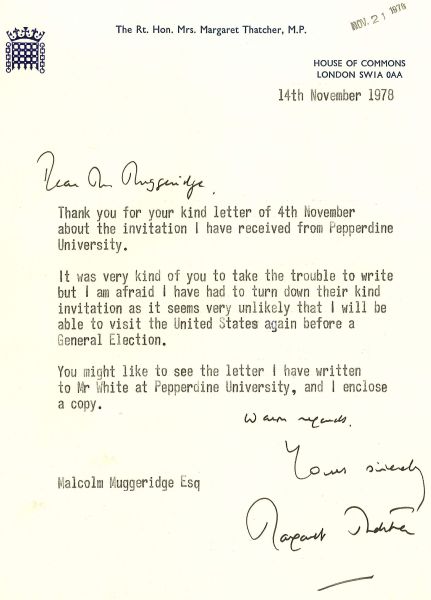
Malcolm Muggeridge connected with other conservative politicians, as well. In 1978, he evidently encouraged Margaret Thatcher, former Prime Minister of Britain (who died at 87 on April 8, 2013) to accept an invitation to speak at Pepperdine University. At this time, Thatcher was still a Member of Parliament. Unable to attend due to prior commitments, she sent gracious responses to both H.A. White, president of Pepperdine, and Muggeridge.
Dr. Mal Couch
Dr. Mal Couch died on February 12, 2013, age 74. Born and raised in Dallas, attending Scofield Memorial Church where he heard such preachers as Harry Ironside, Lewis Sperry Chafer, V. Raymond Edman and Carl Armerding, perhaps it was inevitable that he would find himself immersed in dispensational theology and its accompanying prophetic emphasis. 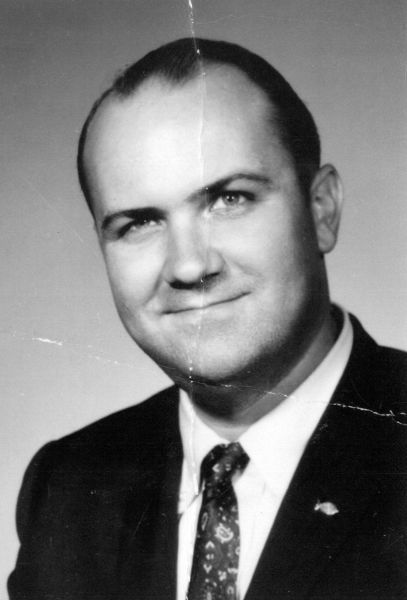 After earning his B.A. from John Brown University, he returned to his hometown where he attended Dallas Theological Seminary, earning his Th.M in Systematic Theology. Aside from ministry, he supported himself in the television and film industry, editing news broadcasts and documentaries, keeping him close to current events. On November 22, 1963, Couch, a senior at DTS, was assigned by Channel 8 to film John F. Kennedy’s fateful Dallas visit, riding in the motorcade a few cars behind the President.
As shots rang out from Texas School Book Depository, he saw the rifle barrel drawn back into the sixth floor window. Couch was responsible for filming the brief footage of bystanders dropping to the grass at Dealey Plaza. His eyewitness testimony is documented in the Warren Commission. “One thing that impressed me in the days that followed the assassination of President Kennedy,” he told an interviewer, “was that so many people appeared confused and lost at that moment. They walked around the city in a daze. They had no connection with life, it seemed. For me, my personal faith in Jesus Christ and in a God who controls the affairs of men, did not change a bit. In fact, it gained deeper roots.”
Moving north to Chicagoland, he worked a part-time editor for Moody Monthly while also serving as pastor of Naperville Bible Church (now called Gracepoint Church). At his 1966 installation ceremony, the Invocation was presented by Dr. Merrill Tenney of Wheaton College; the Charge was delivered by Dr. John Walvoord, president of Dallas Theological Seminary. Busy with ministry, Couch also attended Wheaton College graduate school. “I can think of no better place for training Christians in the art of communicating the message of scripture,” he wrote on his application.
Couch taught at Philadelphia School of the Bible, Moody Bible Institute and Dallas Theological Seminary, specializing in the fields of systematic theology, history, Biblical Hebrew and New Testament Greek. Recently, he was president of Scofield Ministries in Clifton, TX and Pastor of Clifton Bible Church.
A man of many abilities, Mal Couch was a photographer, radio talk show host and a licensed pilot. Using his directing and editing skills, he produced The Occult with Hal Lindsay, The Temple with Zola Levitt and Someone Cares with Charles Colson. He was also a prolific writer, including Inerrancy, Titus and the Birth of the Nation of Israel. One of his final titles was Going Home: Our Blessed Hope of Heaven and Eternity, written with his wife, Lacy.
Dr. Howard Hendricks
Howard G. Hendricks, longtime professor at Dallas Theological Seminary, died on February 20, 2013, at age 88. In addition to writing, classroom teaching and conference speaking, he mentored such Evangelical leaders as Tony Evans, Joseph Stowell, Chuck Swindoll, David Jeremiah and Erwin Lutzer. 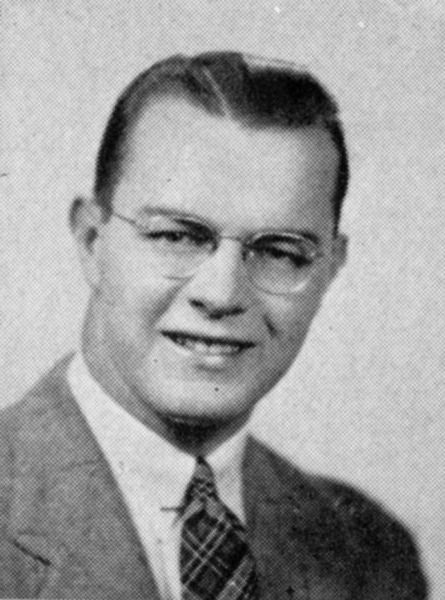
Hendricks, interviewed by The Dallas Morning News in 2003, remarked, “You’re looking at a completely fulfilled human being. If I died today having produced some of the people God has given me the privilege of shaping, it will have been worth showing up on the planet.” He earned his bachelor’s degree from Wheaton College in 1946 and a master’s degree from Dallas Theological Seminary in 1950, joining its faculty a year later. Known as “Prof” to generations of students, he remained until 2011, when health issues forced him to retire.
During his years at Wheaton, Hendricks roomed with three other male students in “Peterson’s Palace,” a privately owned home near campus. He was a member of the Beltionian Society.