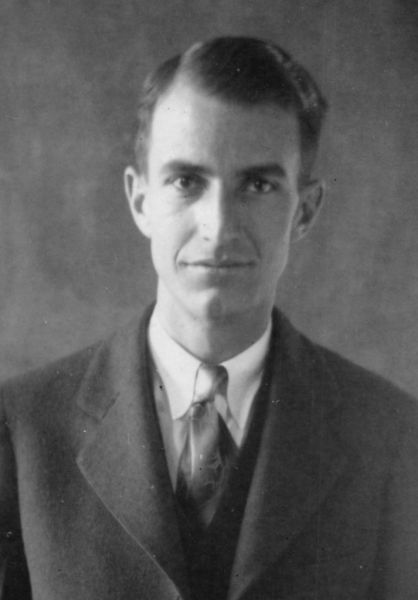
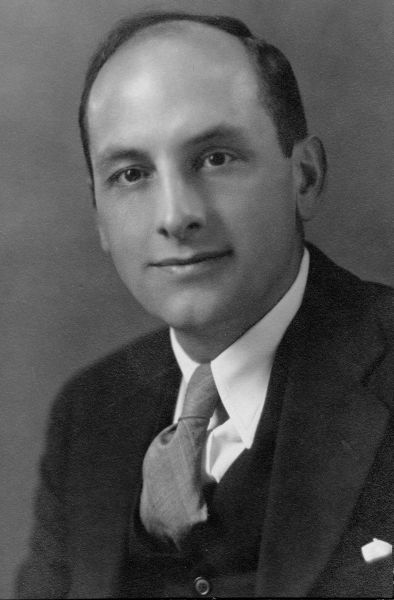
 If Charles F. Baker represented an extreme form of dispensational theology, his credentials were impeccable. Born of English immigrant parents in Dallas, Texas, in 1905, he attended Scofield Memorial Church, founded by C.I. Scofield, editor of the Scofield Reference Bible. Baker’s pastor was Lewis Sperry Chafer, who also founded the Evangelical Theological College, which later became Dallas Theological Seminary. Here Baker attended, a highly motivated student, again sitting under Chafer’s ministry. Graduating, Baker entered Wheaton College, accompanied by a letter from DTS registrar Rollin Chafer to Wheaton College registrar Enoch Dyrness. It stated: “Charlie is one of the best students we have ever had in the college and it gives me great pleasure to commend him to your faculty. Not only has his class work been of the highest grade, but he is one of the most spiritual men we have in the institution.” After successful studies at Wheaton Baker moved in 1932 to Milwaukee, Wisconsin, where he ministered for 23 years as pastor of Fundamental Bible Church. He also assisted J.C. O’Hair, pastor of North Shore Church on Wilson Street, Chicago, as chief engineer for broadcasting at station WPCC (We Preach Christ Crucified). In 1939 Baker founded Milwaukee Bible College; and in 1961 moved the school to Grand Rapids, Michigan, where it was called Grace Bible College. Retiring in 1967 he was named President Emeritus and Distinguished Professor of Theology. In 1971 Baker published his 688-page masterwork, A Dispensational Theology. In its preface he wrote: “Very few attempts have been made to produce a work on Theology which is dispensationally oriented. A survey of some two dozen standard works on the subject revealed the fact that more than half of them make no reference whatsoever to the subject of the dispensations. Most of those that do make mention of the Scriptural expression devote only the briefest reference to the subject, and their treatment of it is mainly from the viewpoint of Covenant Theology, which fails completely to recognize the distinctive character of the present dispensation, called by Paul the dispensation of the mystery, a plan and program of God which was kept secret from all former ages and generations (Colossians 1:26). Only one major work on Theology was found which recognized the dispensational principle in the interpretation of Scripture.” After his wife, Teresa, died in 1982, Baker moved to Escondido, California, and was married to a long-time friend, Ruth Lohman Smith, in 1985. Baker’s other books include Understanding the Book of Acts, Dispensational Relationships, and Understanding the Gospels. In addition, he was instrumental in the formation of Grace Gospel Fellowship, Grace Mission and Grace Publications as well as editing two periodicals, the Biblegram and Truth Magazine. He died in 1994.
Normative, mainstream dispensationalism, as espoused by Dallas Theological Seminary, Moody Bible Institute or Philadelphia Biblical University, might agree with aspects of Baker’s research, but it would vehemently object to many of his assertions. For instance, Baker believed that since Paul does not seemingly mention baptism by immersion after Acts 13, it is not valid for the current dispensation, though the Lord’s Supper should continue to be observed.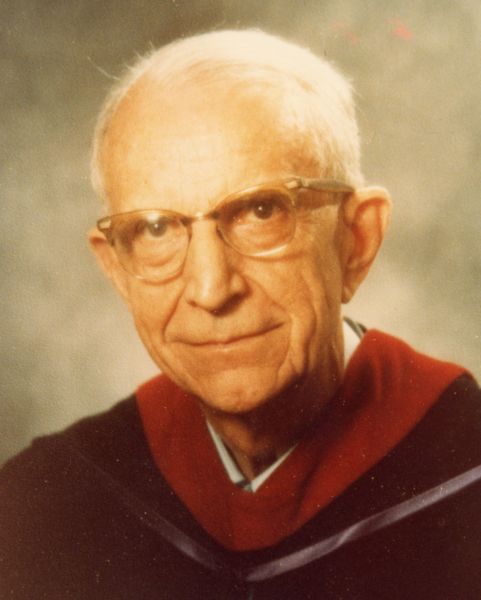 Others, such as E.W. Bullinger and Oscar Baker, held that both baptism and the Lord’s Supper fall outside of the current, post-Acts dispensation, and are not valid church ordinances. Dr. H.A. Ironside, pastor of Moody Church, trustee of Wheaton College and part-time DTS faculty, utters hard words against ultradispensational doctrine in his 1938 apologetic, Wrongly Dividing the Word of Truth: Ultradispensationalism Examined in the Light of Holy Scripture: “I send forth this edition praying that the Lord will use it to deliver many more from the unscriptural and positively harmful teachings of the ultra-dispensationalists who, under the guise of setting forth high truth, are deliberately attempting to rob Christians of the greater part of their Bible.” Despite the controversy attached to his theological stance, Baker was known as a gracious, kindhearted man.
Other prominent ultradispensationalists were Harry Bultema, pastor of Berean Bible Church, and Cornelius Stam, president of the Berean Bible Society and brother of missionary martyr John Stam.


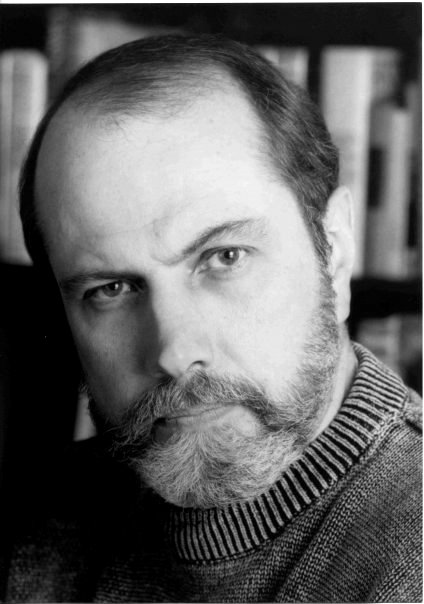
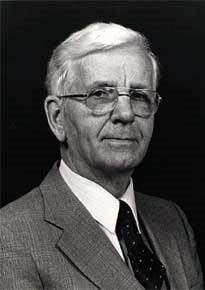
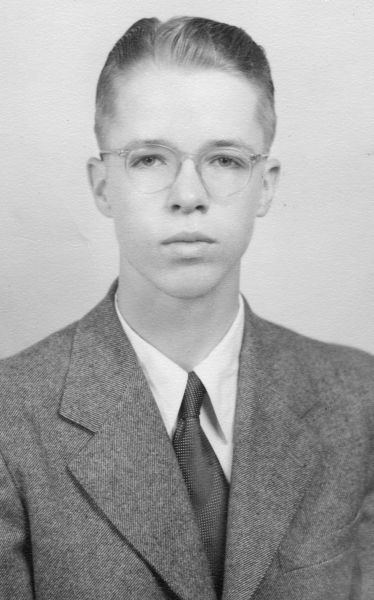 Wheaton College has provided intellectual incubation for many prominent theologians, professors and pastors. Surely one of the most brilliant was Zane Clark Hodges. Born in Washington, DC, but raised primarily in Chambersburg, Pennsylvania, Hodges attended a Plymouth Brethren assembly with his parents and younger brother because there were no Baptist churches in town. Blessed with a sturdy intellect, he completed fifth and sixth grades in one year. During his high school junior year he became editor-in-chief of the student newspaper while participating in the Debating and Latin clubs. Reading widely, he also enjoyed comic books, which he collected, and played baseball. Hodges accepted Christ’s gift of eternal life at a meeting on the Greenwood Hills Bible Conference grounds in 1946. “Since that time,” he writes in his 1949 Wheaton College application, “I not only embrace the Lord Jesus as my Saviour, but also as the Son of God and the one who keeps me and is coming back, perhaps soon.” During this period he desired to enter the mission field as his life’s work. At college Hodges studied Greek, French and German, and further honed his analytical and oratorial skills with the Beltionian Literary society. The administration noted his poised, modest aspect, along with his industry and efficiency. As a result of his academic prowess he was inducted into the Honor Society. He was graduated in 1954, receiving his BA in Greek. Dr. Clarence Hale, Chairman of the Department of Foreign Languages, prophetically observes on Hodges’s placement form: “[He] is a young man of thoroughly reliable character and very high scholarship. He presents a neat appearance and meets people easily. He gives the promise of becoming a well-trained Bible teacher.” From Wheaton Hodges matriculated to Dallas Theological Seminary (DTS) where he acquired his Th.M. before joining its faculty as professor of New Testament Literature and Exegesis, remaining for 27 years until departing to pursue speaking and writing. Hodges produced commentaries on Hebrews, 1-3 John and James, in addition to writing articles for Bibliotheca Sacra, the scholarly journal for DTS. With Arthur Farstad he co-edited The Greek New Testament According to the Majority Text.