All posts by admin

Blanchard Hill Gang

Over seventy years ago an incident transpired that involved a greased pig and a future president of Wheaton College. The event was recounted in the April 25, 1980 edition of the Record student newspaper and is transcribed below.
Blanchard Hill Gang caught on pig count
by Bill Gianopulos

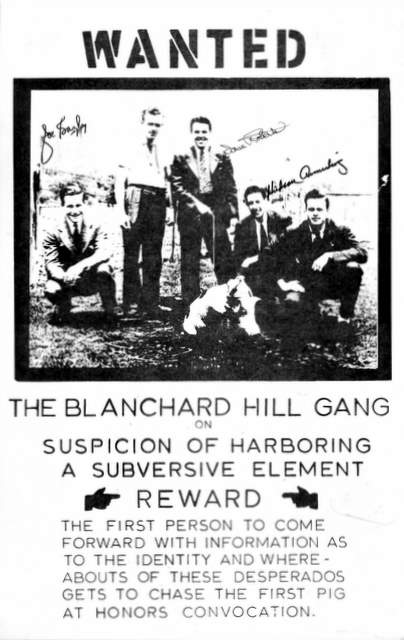
April Fools’ morning, you are reading the large black and white poster attached to a tree on the front lawn of Blanchard.

“WANTED: The Blanchard Hill Gang on suspicion of harboring a subversive element. REWARD: The first person to come forward with information as to the identity and whereabouts of these desperados gets to chase the first pig at honors convocation.”

“The offer is irresistible,” you think. After rereading the poster you carefully analyze the attached photograph. “Nothing special,” you think. “Just five men standing around an ugly pig.” You eye the photo again. “That guy looks familiar.” You try to repress the thought. “Is that Dr. Armerding? He’s that close to a pig — and still smiling?” The poster, which still remains a mystery to most Wheaton students portrays five seniors from the class of ’41. Joe Bayly, Senior Sneak Chairman, is on the far left. Next to him stands Al Fesmire, coordinator of the Tower concerts. David Roberts, senior class president, stands behind the pig holding the leash. Hudson Armerding, class treasurer, kneels behind the pig and Jim Pass [kneels] on the far right.

The Blanchard Hill Gang incident of May 1941, climaxed a year of vigorous class competition between juniors and seniors. Back then, everyone knew the seniors by their orange and blue jackets with the “Class of ’41” seal emblazoned over the left pocket. Men and women sported their senior jackets. “That was considered real class, ” Roberts, now assistant to President Armerding said. On Wednesday, May 14, 1941, the junior class sponsored an all-school “Rodeo Round-up, ” with free stage coach rides, lemonade, Western vittles, and a free cowboy whip for every junior. Decked out in bandanas, ten-gallon hats, boots, and chaps the juniors trotted to Pierce [Chapel]’s “chuck wagon” at 7:15 for a ham and egg breakfast. The faculty matched their pie-throwing ability with the student body in the pie-face race at noon. At 4 p.m. the rip-roaring rodeo moved into the spotlight at Lawson Field. Parades, medicine shows, and hog-calling took top billing.

But the greased pig scramble was to climax the day’s events.

The Blanchard Hill Gang, “never outdone by infantile juniors,” did their best to spoil the climax. As Roberts puts it, “We wanted the biggest impact with the least disruption.” On Tuesday, the eve of the rodeo, the Gang frantically searched for the pig. They found it in a faculty member’s garage. One member reached for the door hinge and yanked out the pin securing the door. The wind blew the door open and the pig waddled out and into the street. “We didn’t want the pig run over by a car, ” Roberts says half sarcastically. He remembers the five of them throwing the pig into the back seat of Fesmire’s car and driving to a farm a few miles south of campus. An accomplice snapped the photo which appears on the poster. “After the picture was taken, we boarded out the pig until the next days’ events were over,” Roberts recalls. “The junior class council went to the garage Wednesday morning to grease the pig. But the pig was gone.” Roberts chuckles as he recalls Fesmire’s attempt to deodorize the back seat of this car. “It smelled like a pig farm,” he says. “He washed, hosed, and sunned the seat to get rid of the pig odor but he couldn’t. Fesmire sold the car. “I learned one thing,” says Roberts. “When I saw that poster last week I realized that the evil men do, lives after them.”

What can we learn from this? First, even college presidents were once college students and are not beyond pig pranking. Second, it is obvious that the evolutionary consciousness of pig pranking has become more devious in recent years. In 167 B.C. Antiochus Epiphanes entered Jerusalem and defiled the temple by pouring swine blood on the altar. Last year history almost repeated itself in Edman Chapel at the Spring Honors Convocation.
A Merry Merrill Tenney Christmas

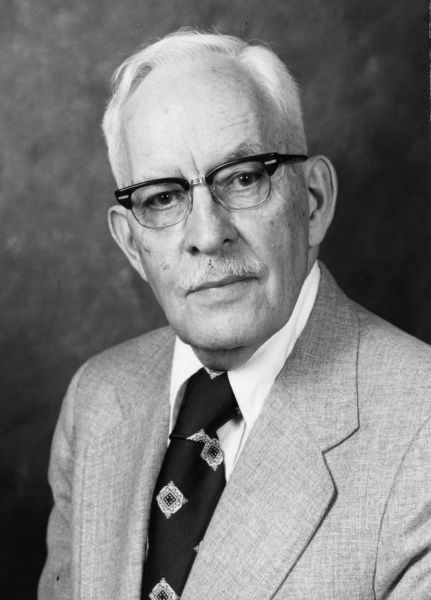
This fine bit of Christology from Dr. Merrill Tenney, former Dean of the Wheaton College Graduate School, appeared in the December, 1958, Alumni Magazine.

Merrill TenneyIn the obscurity of a stable in a cave in Bethlehem of Judea there occurred one of the most ordinary events of history: a baby was born. Nothing could be less spectacular; it is as common as mankind. Every one of us who now lives entered this world by that same gateway, so that this baby was no exception. He did not come from an aristocratic family. Mary, his mother, though of good ancestry, was of Galilean peasant stock, and her husband, Joseph, was a village carpenter. Both were well known to all their neighbors as good but ordinary people, probably neither better nor worse than the average. They had neither power, nor wealth, nor influence. No particular notice was taken of the baby’s arrival, and there was no celebration in His honor. The populace of Bethlehem did not know that He existed.

Nevertheless, His birth was a landmark in the history of the world that marked a change in the very method of reckoning time, and that changed the course of empire. While the fact of His birth was not extraordinary, the nature of His birth most certainly was, for both of the Gospels that describe it assert unequivocally that He was born of a virgin. Mary, His mother, officially betrothed to Joseph, but the marriage had not been consummated before He was born. The accounts tell us that His birth was announced by an angelic messenger, and that the Holy Spirit so came upon Mary that her child was called “the Son of God” (Luke 1:35), and the celestial hosts who appeared to the shepherds in the fields of Bethlehem sang of “Glory to God in the highest, and on earth peace, good will toward men,” when He entered the world.

This mingling of the supernatural and the natural, of deity and humanity is the miracle of Christmas. God has entered into the experience of humanity not as a casual visitor, but as a partaker of our flesh will all its limitations and sorrow. “He was in all points tempted like as we are.” Nevertheless, he was not just a victim of fate, for through the vehicle of the human body He labored, taught, died and rose that He might reveal the nature of God to men, and that He might fulfill God’s purpose in saving them. The miracle of Christmas is that in the coming of Jesus, God made himself our Redeemer, and that in the ordinary process of birth a new and supernatural power entered human life. Because He is both God and man, He is able to destroy death and to give eternal deliverance from fear and failure.

The Third Man Factor

We know the names of the great. But there are those who, as influential as any statesman, author or inventor, step in and out of history. Amazingly, their identity remains totally unknown.

One such figure appears in the Bible, Daniel 3:16-28. King Nebuchadnezzar did not appreciate the fact that his captives, “certain Jews,” Shadrach, Meschach and Abednego, refused to worship the golden image he had provided, so he ordered the boys bound and thrown into a blazing furnace. Looking into the pit, the king saw another figure. “Lo, I see four men loose,” he told his confused counselors, “walking in the midst of the fire, and they have no hurt; and the form of the fourth is like the Son of God.” The king concluded that God had sent an angel to protect the three Jewish boys.

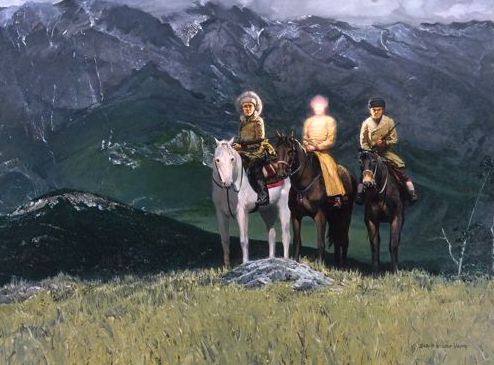
One day in the mountains of Tibet missionaries Bob Ekvall and Ed Carlson (both graduates of Wheaton College) were riding their horses. Fully aware that larger packs of marauders might overtake a smaller groups, both carried rifles and knew how to use them. Though Ekvall never killed a man, he stated that he had shot the horses out from under a few. As Carlson and Ekvall rode up a remote pass, they saw in the distance several men on horseback galloping toward them, obviously plotting an assault. Suddenly the would-be bandits stopped and retreated. Later, Ekvall came across one of the men and asked why they had ridden away so hastily. “You outnumbered us,” he replied. “We weren’t afraid of you. We weren’t afraid of your friend. But who was that shining one with you?” Ekvall was understandably baffled.

Encountering apparitions was new to Ekvall and Carlson, but it is not so to the human experience. John Geiger, author of The Third Man Factor (2009) chronicles several such visitations. A few instances from the book illustrate:

Sir Ernest Shackleton, during his 1916 expedition to the South Pole, ordered his crew to abandon their ice-battered vessel, Endurance, and trek across breaking floes and frozen tundra, desperately searching for the shelter of a whaling station. Traversing mile after agonizing mile over glaciers and unnamed mountains, Shackleton and his starved, exhausted men at last reached their destination. Later, the explorer admitted that he and his companions, each without telling the other, had experienced the acute sense of a comforting, protective presence guiding them. In lectures he spoke of the event, but declined to elaborate. “None of us cares to speak about that,” he told an interviewer. “There are some things which can never be spoken of. Almost to hint about them comes perilously near to sacrilege. This experience was eminently one of those things.”

During his historic 1927 transatlantic flight from New York to Paris, Charles Lindbergh, piloting the Spirit of St. Louis, flew into explosive thunderstorms and blinding fog, drifting with each mile ever closer to sleep. To keep awake, he doused himself with cold rainwater. During the twenty-second hour of his voyage Lindbergh sensed other presences aboard the craft. These “phantoms,” he wrote, were there to assist, “conversing and advising on my flight, discussing problems of my navigation, reassuring me, giving me messages of importance unattainable in ordinary life.” The famed aviator did not discuss this until nearly three decades after the flight. He remembered “transparent forms in human outline,” but stated, “I can’t remember a single word they said.”

On 911 during the terrorist attack on the Twin Towers, at least one documented report told of an unknown rescuer suddenly appearing amid the chaos to lead desperate office workers to safety through thick smoke and falling debris.

Though necessary to survival, Geiger says, the Third Man is not “real” as a physical manifestation. He believes that each human brain carries an “angel switch,” a brain response activated by extreme and unusual circumstances. The Third Man may be explained neurologically, he suggests, but this does not answer “why” he appears. Ultimately, the Third Man is an instrument of hope.

The prophet Daniel, Robert Ekvall, Ernest Shackleton, Charles Lindbergh and many others throughout history would surely agree with Geiger that the Third Man is an instrument of hope, but would wholeheartedly disagree that he is not real. Something unreal cannot lead a dying man to safety, just as a starving man cannot eat unreal food that suddenly appears on his plate. Who or whatever the identity of the Third Man, he religiously keeps his appointments.

A painting depicting Ekvall’s encounter, “Who Was That Shining One?” by DeWitt Whistler Jayne, is displayed in the Special Collections reading room on the third floor of the Billy Graham Center.

Edgar C. Bundy

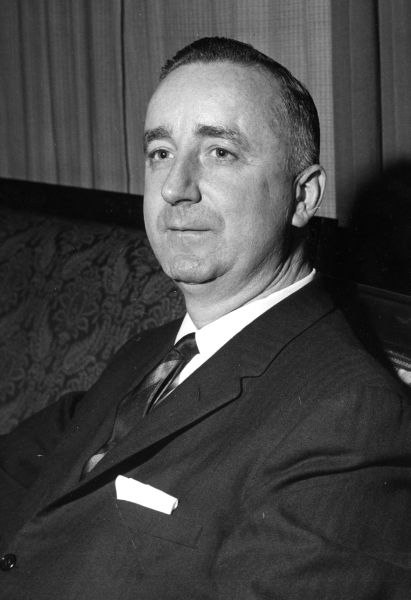
Edgar C. Bundy was a strident opponent of left-wing politics and one of the supremely colorful personalities inhabiting Wheaton. A retired Air Force former Staff Intelligence Officer, serving in every major theater of operations during World War II, he was also the Chief of Research and Analysis, Headquarters Intelligence, of the Alaskan Air Command after the war. He testified frequently as an expert witness in both open and executive sessions of both houses of Congress and state legislatures. An ordained Southern Baptist minister, Bundy preached at conferences and churches across America. Opposing the incursion of theological compromise and radical leftism, he spoke on hundreds of radio and television talk shows, debating such figures as Bishop James A. Pike and spokesmen of the Communist Party. He was a member of the Mayflower Society, The Order of Founders and Patriots of America, the Sons of the American Revolution, the American Legion, The Military Order of the World Wars, the Veterans of Foreign Wars and was past president of the Miami Beach Symphony Orchestra.

For decades he and his wife, Lela May, resided in the Jesse Wheaton home, built in 1838, given to them by a Wheaton family member as an inheritance. At their home the Bundys entertained doctors, attorneys and politicians. They had no children, but Lela May worked alongside her husband in his endeavors, including raising German shepherds which they often brought into their offices at the right-wing Church League of America. As president of the organization, Major Bundy (as he preferred) maintained a far-reaching mailing list for the distribution of his newsletter and books. His roommate in officers training school was Senator Lloyd Bentsen, and during drill exercises he marched with actor Clark Gable. Bundy’s collection of books, maps and file cards was occasionally used by the FBI for research. World-traveled and widely connected, he enjoyed friendships with powerful conservative voices like Robert Taft, William F. Buckley and Ronald Reagan. Bundy, single-minded, fearless and irascible, was a Cold War warrior who undoubtedly loved his country and did not deviate from his principles. Bundy perceived that certain evangelical leaders and institutions had been co-opted by unfriendly forces through the slow, steady poison of compromise. In books such as How Liberals and Radicals are Manipulating Evangelicals and How the Communists Use Religion he presents his expose of their tactics, chronicling the evangelical drift toward liberalism and Communism. “Great moral damage has been done to the United States as a result of this neoevangelical compromise,” he writes.

Pearl S. Buck

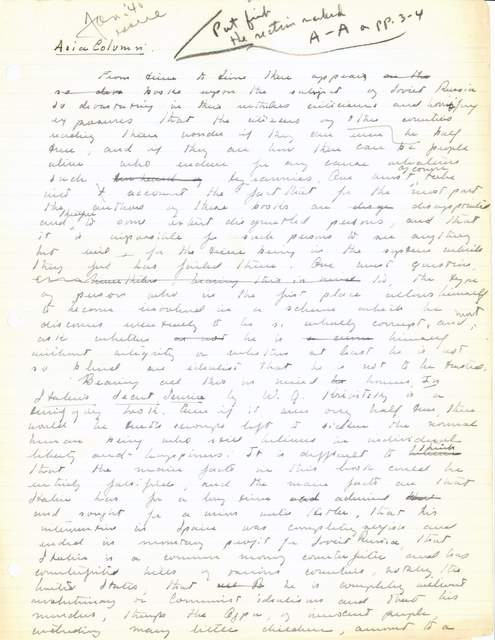
In recent days a collection of four Pearl Buck manuscripts have been placed on deposit at the Wheaton College Special Collections. These include a hand-written “Son of Fate” manuscript, “Cultural Contacts of the West with the Far East”, a typed speech given to the Cooper Union on February 1, 1944, and a signed autograph manuscript of her “Asia Column” from 1940. The featured “Asia Column” is five pages on 8.5 x 11″ three-ring paper with heading in Buck’s hand, and includes Buck’s signature, with cross-outs and rewrites by the author. In April of 1935, Buck took charge of the “Asia Book-Shelf” column for Asia Magazine, assigning books for review and writing many of the notices herself. In this five-page manuscript she choose four books for review that were incredibly significant and have been reprinted and still available since first published in 1939: In Stalin’s Secret Service (Krivitsky), British Diplomacy in China, 1880-1885 (Kiernan), A Japanese Village (Embree), and Five Miles High (Bates).

Pearl S. Buck (1892-1973), author and activist, was an ardent feminist and multi-culturalist. The first American woman to win a Nobel Prize for literature, she was acknowledged by most of her peers as one of the leading authorities on China and Asia. She had gone to China with her missionary parents at age three months in 1892. She was educated in the United States but returned to China afterward. Upon her return to the United States in the 1930’s, Buck found a country isolationist in thinking and parochial in world-view. With a characteristic energy, Buck and her second husband Richard set about making east and west better known to each other. Her work at Asia Magazine went a long way to assist in that task. (Conn, Pearl S. Buck: A Cultural Biography, p.181).

Svetlana, the Little Princess

While living in Russia, Svetlana Stalin, the only daughter and last surviving child of Soviet dictator Josef Stalin, was “the little princess.” A perfume and many Russian girls were named after her. At the end of her days in Wisconsin, far from her homeland, she died in obscurity on November 22, 2011, at age 85. Between those points Svetlana rode the soaring ups and dismal downs of an extraordinary life.

Defecting in 1967 from Russia, she moved to India, then to Europe, then to the United States. Already widowed and divorced, she married American William Wesley Peters, a former son-in-law to Frank Lloyd Wright, and took the name “Lana Peters.” Returning to Moscow in 1984, she moved to Soviet Georgia, than back to America, then to England, then to France, back to America, then to England again, before finally settling in Wisconsin. During her U.S. sojourn, Svetlana espoused deeply conservative causes, financially supporting William F. Buckley’s National Review. In Russian, she seemingly denounced these views, stating that she had been a “pet” used by the C.I.A. Residing again in the U.S., she retracted her former anti-conservative sentiments, accusing the press of mistranslating her statements.

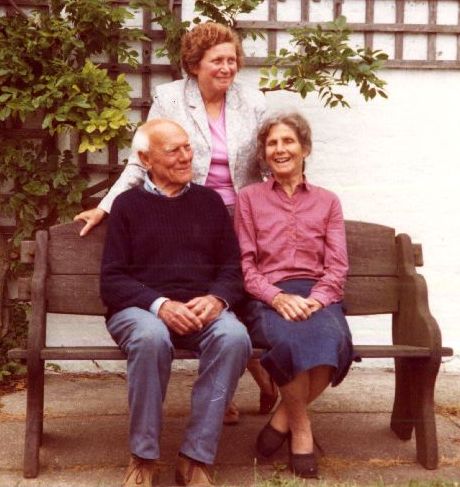
In 1982 the BBC aired “A Week with Svetlana,” documenting her visit at the Sussex home of Malcolm and Kitty Muggeridge. The famed defector discussed her experience as Stalin’s daughter and the growth and stability of religion in the USSR.

The program was positively received. One woman wrote to Muggeridge, “…It was so very interesting to meet Svetlana, whose faith has sustained her through her joys and sadness…Her conversation, riveting and evocative, reminded me of my young days…Eager to create a brave, new world…” Another wrote: “My heart has been set singing after watching on the television yourself and your guest Stalin’s daughter…The pictures of your house, the garden and the dear English countryside was a feast indeed. Even more, was the unwavering faith of your guest. ‘Christ is alive!’ Hallelulah, my heart replies…”

“You can’t regret your fate,” Svetlana once remarked, “although I do regret my mother didn’t marry a carpenter.” She authored two autobiographies, Twenty Letters to a Friend and Only One Year.

The papers of Malcolm Muggeridge (SC-04) are maintained at Wheaton College Special Collections.

A.A. Milne

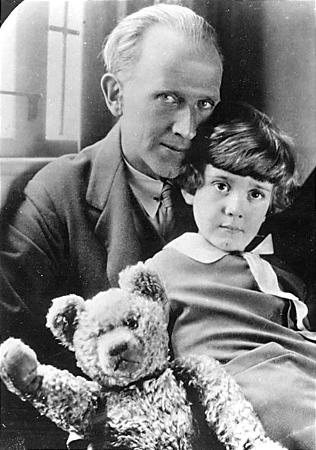
Alan Alexander Milne was born in Kilburn, London, England in 1882 and grew up at Henley House School, a small independent school in London run by his father. One of his teachers was H.G. Wells who taught there in 1889-90. Milne later attended Westminster School and Trinity College, Cambridge, studying mathematics. While at Cambridge Milne edited and wrote for a student magazine, Granta, where he came to the attention of editors at Punch, a humor and satirical magazine. He would later work at Punch as an assistant editor. In 1913 Milne married Dorothy “Daphne” de Selincourt and together they had one child, Christopher Robin Milne, on whom was based the Christopher Robin character of his later Winnie the Pooh books. Milne retired to his farm after a stroke and brain surgery in 1952 left him an invalid. He died in 1956.

Materials on A.A. Milne and monographs of his works are located in the William S. Akin Rare Book Collection in the Wheaton College Special Collections.

Jonathan Edwards letters arrive at Wheaton

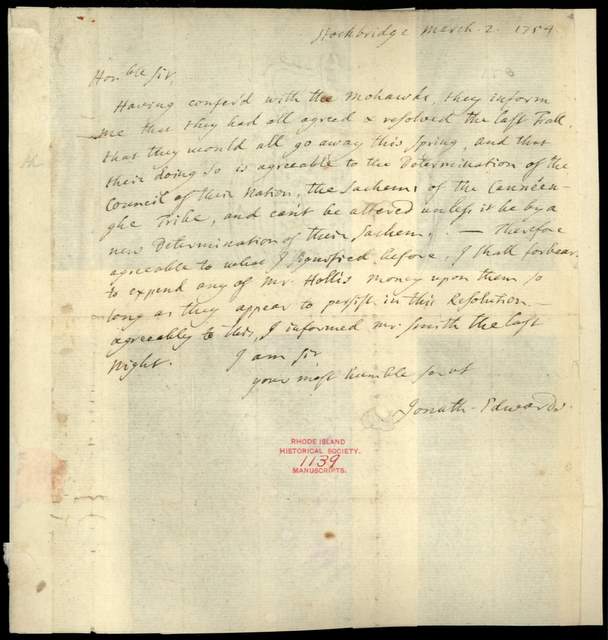
In recent days a collection of letters related to Jonathan Edwards, noted preacher, theologian and prominent figure of the Great Awakening, have been placed on deposit at the Wheaton College Special Collections. These sixteen original letters written by or to Jonathan Edwards were written from 1752 to 1756 and were previously held by the Rhode Island Historical Society. Noted Edwards biographer George Marsden cited one such letter from Elisha Williams to Jonathan Edwards written August 19, 1752 in his book Jonathan Edwards: A Life. The following letter highlights Edwards’ work as a missionary among Native Americans, namely the Mohawk people of upstate New York.

The Jonathan Edwards collection is available to researchers and students in the Manuscripts Reading Room of the Billy Graham Center (map). An exhibit featuring the letters is being planned for Fall 2012.

Dr. Elsie Storrs Dow

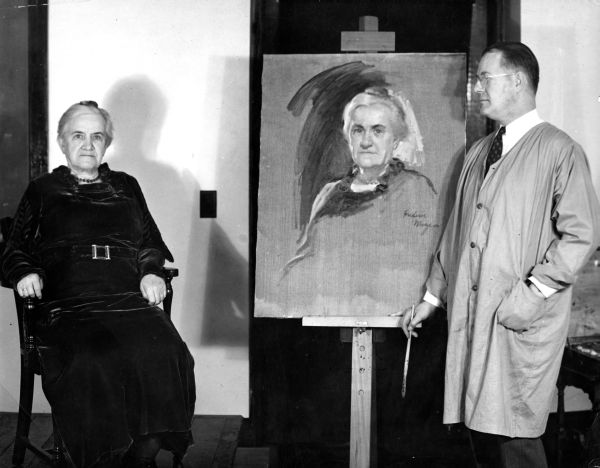
The stocky lady in the long black dress, striding confidently on short legs from class to class, was Dr. Elsie Dow, authority on Shakespeare and Browning. Born in Sycamore, Illinois in 1859, she graduated from Wheaton College in 1881. After employment in high schools and academies, she returned to Wheaton in 1889 as Professor of English Language and Literature. In addition to teaching Classics, History, Mathematics and English, she also served as registrar. Dow studied at Harvard, and in 1922, because of her outstanding achievements in literature, Lawrence College conferred upon her the Doctor of Letters degree. Popular on campus, she was in demand off campus, as well, as reader and speaker.

At the 1937 Homecoming chapel Dr. Buswell presided over the unveling of a portrait of Dow done by Frederick Mizen of Chicago. Herman Fischer accepted the painting for the college. After Elsie Dow spoke, Mignon Bollman McKenzie sang a special number composed for the occasion by Marion Downey and Corinne Smith. The piece was a musical setting of Miss Dow’s poem, “Whatsoever Things are Lovely.” The service was concluded with a benediction by Darien Straw.

For the 1941 inauguration of V. Raymond Edman she wrote:

My word of greeting to our new president is a very sincere welcome from the old to the new. I have been on this campus long enough to have been under the administration of each of our four presidents, and Wheaton has been to me in turn — President Jonathan Blanchard, President Charles Blanchard, President J. Oliver Buswell, Jr. — as it is to me in days to come, President Edman…I see the picture clearly, it is the heroic type. Wheaton will not be Wheaton if it ever loses that type as its head.

Upon her retirement in 1942 Darien Straw wrote:

When Miss Dow began teaching here she was an experienced teacher. Teachers were invited for reasons. I do not know that they ever applied for the job. Schedules were thirty hours a week. Salaries were low and pro-rated, so that the College was kept out of debt by paying all bills, and what was left was apportioned among the teachers with the understanding that accounts were closed at the end of each year. I doubt whether she ever had a written contract for salary yet. She taught all around the curriculum; if a department was short, she could substitute. It is rare for a woman to take a man’s chair and hold it for more than half a century. She did it. Always poised, always sedate, a thousand abstract Christian virtues embodied in the concrete; a walking literary library, with no slang version; among her pupils admired, among her students loved, wherever known and respected; Doctor Dow is thus held in high esteem by the trustees and carries with her ever their benediction and felicitation.

In 1944 100 friends honored Dow on her 85th birthday, visiting her home at 527 Kenilworth. Two outstanding features of the decorated dining room were the large centerpieces of red roses and two two-tier cakes; the latter were brought from Ann Arbor, Michigan. Miss Julia Blanchard assisted with refreshments during the afternoon. Friends and alumni, ranging throughout her 50-year teaching career, offered congratulations. Miss Dow received cards, flowers and gifts from those who could not attend. Special verse messages by Darien Straw and Judge Frank Herrick were read.

She died on October 29, 1944.

Orrin Tiffany

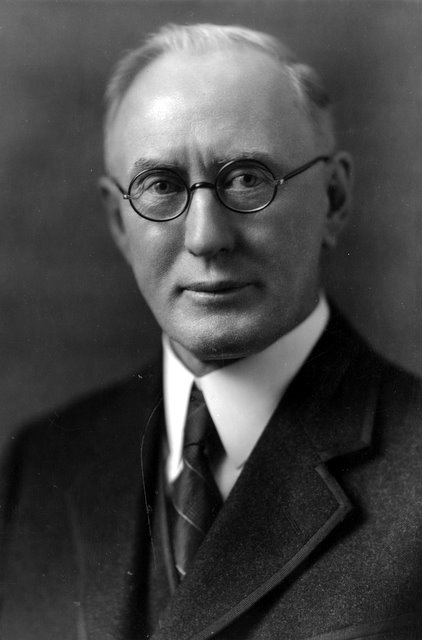
Orrin E. Tiffany was born March 27, 1868 to DeWitt and Lidia Parker Tiffany and grew up in Havana, Minnesota. After the death of his first wife of twenty-five years, Grace English, Dr. Tiffany married Kathrine Bellanger MacDonald in 1925. Dr. Tiffany came to Wheaton College in 1929 as Chairman of the Department of History and Social Sciences, and was Professor of American and Recent World History until his retirement in 1945. Among his students and faculty colleagues he was well known for his interest in world affairs; former graduates of the department frequently wrote to him for his views on international developments. Tiffany earned his A.B., A.M., and Ph.D. degrees at the University of Michigan, and was among the first recipients for the Phi Beta Kappa honor shortly after it was offered. In 1945, Seattle Pacific College conferred on him the honorary degree of Doctor of Laws. Before coming to Wheaton College, Dr. Tiffany held professorships and administrative posts at Greenville, Western Maryland, Seattle Pacific, and Whitworth College. In 1945 he attended the United Nations Conference on international organization in San Francisco. His most important contribution to scholarly writing was The Relations of the United States to the Canadian Rebellion of 1837-1838, published by the Buffalo Historical Society, and considered by recent historians as still “the most detailed study” and “the most satisfactory treatment of the subject.” Tiffany died February 2, 1950.

The Tiffany Memorial Lectures were established nearly fifty years ago in 1952 at Wheaton College in honor of the late Dr. Orrin Edward Tiffany. The aim of the Tiffany Memorial Lecture on Foreign Affairs is to foster interest in and understanding of international affairs on the college campus. Past speakers include Kenneth Landon, Robert McNamara, Zbigniew Brzezinski, Mark Hatfield, John Lewis Gaddis, Robert Pastor, Anthony Lake, Robert Seiple, and James Turner Johnson.

The Orrin Tiffany Papers are available to researchers at Wheaton College. The collection contains general biographical information on Dr. Tiffany, including information regarding his activity at Greenville College, Seattle Pacific College, Whitworth College, and Wheaton College. There are materials related to his book, Canadian Rebellion, and a series devoted to the Tiffany Memorial Lectures at Wheaton College. The materials relating to the Tiffany Lectures comprise the bulk of the collection.