All posts by admin

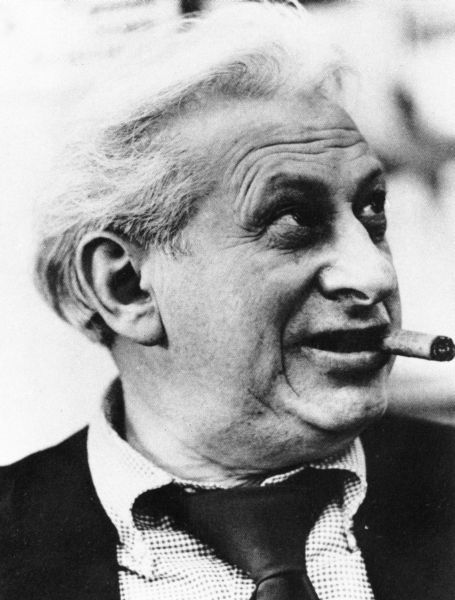
Malcolm Muggeridge and the Iron Lady

As English journalist Malcolm Muggeridge aged, he embraced increasingly conservative principles. Moving from atheism to theism to Catholicism, he adjusted his views, publishing books and articles reflecting his ideology. Enjoying an extraordinary network of friends and acquaintances, Muggeridge interacted with the prominent voices of his day, including authors, films stars and politicians like U.S. President Ronald Reagan, with whom he shared a contempt for abortion.

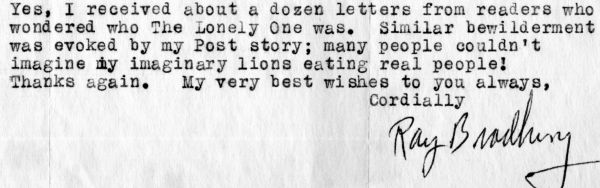
Malcolm Muggeridge connected with other conservative politicians, as well. In 1978, he evidently encouraged Margaret Thatcher, former Prime Minister of Britain (who died at 87 on April 8, 2013) to accept an invitation to speak at Pepperdine University. At this time, Thatcher was still a Member of Parliament. Unable to attend due to prior commitments, she sent gracious responses to both H.A. White, president of Pepperdine, and Muggeridge.

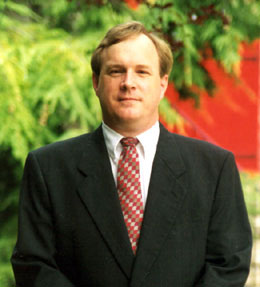
Dr. Mal Couch

Dr. Mal Couch died on February 12, 2013, age 74. Born and raised in Dallas, attending Scofield Memorial Church where he heard such preachers as Harry Ironside, Lewis Sperry Chafer, V. Raymond Edman and Carl Armerding, perhaps it was inevitable that he would find himself immersed in dispensational theology and its accompanying prophetic emphasis. After earning his B.A. from John Brown University, he returned to his hometown where he attended Dallas Theological Seminary, earning his Th.M in Systematic Theology. Aside from ministry, he supported himself in the television and film industry, editing news broadcasts and documentaries, keeping him close to current events. On November 22, 1963, Couch, a senior at DTS, was assigned by Channel 8 to film John F. Kennedy’s fateful Dallas visit, riding in the motorcade a few cars behind the President.

As shots rang out from Texas School Book Depository, he saw the rifle barrel drawn back into the sixth floor window. Couch was responsible for filming the brief footage of bystanders dropping to the grass at Dealey Plaza. His eyewitness testimony is documented in the Warren Commission. “One thing that impressed me in the days that followed the assassination of President Kennedy,” he told an interviewer, “was that so many people appeared confused and lost at that moment. They walked around the city in a daze. They had no connection with life, it seemed. For me, my personal faith in Jesus Christ and in a God who controls the affairs of men, did not change a bit. In fact, it gained deeper roots.”

Moving north to Chicagoland, he worked a part-time editor for Moody Monthly while also serving as pastor of Naperville Bible Church (now called Gracepoint Church). At his 1966 installation ceremony, the Invocation was presented by Dr. Merrill Tenney of Wheaton College; the Charge was delivered by Dr. John Walvoord, president of Dallas Theological Seminary. Busy with ministry, Couch also attended Wheaton College graduate school. “I can think of no better place for training Christians in the art of communicating the message of scripture,” he wrote on his application.

Couch taught at Philadelphia School of the Bible, Moody Bible Institute and Dallas Theological Seminary, specializing in the fields of systematic theology, history, Biblical Hebrew and New Testament Greek. Recently, he was president of Scofield Ministries in Clifton, TX and Pastor of Clifton Bible Church.

A man of many abilities, Mal Couch was a photographer, radio talk show host and a licensed pilot. Using his directing and editing skills, he produced The Occult with Hal Lindsay, The Temple with Zola Levitt and Someone Cares with Charles Colson. He was also a prolific writer, including Inerrancy, Titus and the Birth of the Nation of Israel. One of his final titles was Going Home: Our Blessed Hope of Heaven and Eternity, written with his wife, Lacy.

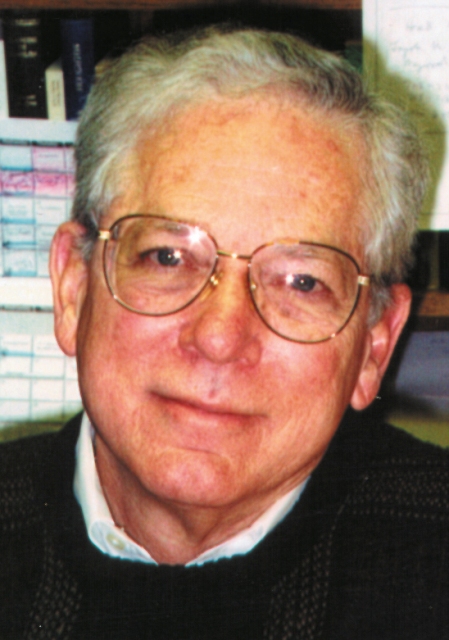
Dr. Howard Hendricks

Howard G. Hendricks, longtime professor at Dallas Theological Seminary, died on February 20, 2013, at age 88. In addition to writing, classroom teaching and conference speaking, he mentored such Evangelical leaders as Tony Evans, Joseph Stowell, Chuck Swindoll, David Jeremiah and Erwin Lutzer.

Hendricks, interviewed by The Dallas Morning News in 2003, remarked, “You’re looking at a completely fulfilled human being. If I died today having produced some of the people God has given me the privilege of shaping, it will have been worth showing up on the planet.” He earned his bachelor’s degree from Wheaton College in 1946 and a master’s degree from Dallas Theological Seminary in 1950, joining its faculty a year later. Known as “Prof” to generations of students, he remained until 2011, when health issues forced him to retire.

During his years at Wheaton, Hendricks roomed with three other male students in “Peterson’s Palace,” a privately owned home near campus. He was a member of the Beltionian Society.

Howard Hendricks, top row, second from right, 1945

If Mugg Were Pope…

Evidently, no one asked Malcolm Muggeridge what he would do were he suddenly elevated to the papal throne; nonetheless, the indomitable journalist, not even Catholic at the time, offers his fantasies on the prospect. “If I Were Pope…” appeared in The National Review, June 9, 1978, the so-called “year of three popes,” during which Pope Paul VI died, Pope John Paul I was elected and reigned for one month before dying, and Pope John Paul II was elected to an influential 27-year papacy. As Pope Francis begins his pontificate after the resignation of Pope Benedict XVI, perhaps it is appropriate to revive Muggeridge’s conservative ruminations on a few ecclesiastical matters.

Summarizing his points:

1) Locating a private, quiet retreat, perhaps Castel Gondolfo, Pope Malcolm would “…meditate upon the Church’s extraordinary survival through the twenty centuries of Christendom despite every sort of abomination committed by, or under the auspices of, my predecessors…”

2) Considering the ramifications of Vatican II, he would “…meditate upon the Church’s present circumstances, so full of confusion, strife and lunacy following Pope John’s Vatican Council and the amazing decision resulting therefrom to have another Reformation, just when the former one – Luther’s – seemed finally to have run into the sand.”

3) Not embracing complete isolation, he would “…have Mother Teresa and some of her Sisters of Charity with me at my retreat, her cooperation having been a precondition of my accepting the pontifical appointment in the first place…Her extraordinary influence and clarification are conveyed, not so much by words or exhortation, as by the love she radiates, shining out from her visibly, like light.”

4) Leaving the serenity of his retreat to address a troubled society, he would “…reissue Humanae Vitae in a greatly simplified form, reinforcing its essential point than any form of artificial contraception is inimical to the Christian life.”

5) Next, “…I should suspend the prohibition of the Tridentine Mass and the traditional Latin liturgy, which would henceforth be permissible whenever and wherever there was an appreciable demand for it. The disco-style vernacular worship, with its sadly banal words, which has come to take the place of the traditional liturgy would be allowed to go on, but I should secretly hope that, as fashions changed, it might wither away.”

6) Muggeridge would tighten the noose in other ways, as well. “Imagining myself sitting in the Vatican, or strolling up and down the Vatican garden, I feel sure I should be assailed by the temptation to do a bit of excommunication and anathema on my own account as and when the opportunity presented itself. Freedom-fighting prelates, liberated nuns, Marxist-dialoguing Jesuits, and other such ribald clerical phenomena of our time, along with the accompanying literature, would be, for me, tempting targets.”

7) Thus empowered, he would also “….prepare the way for an underground Church to go on functioning when the open one has been either forcibly disbanded, or so corrupted and disoriented from within that it can no longer fulfill its traditional role…What I have in mind would be a Christian maquis or clandestine Catacombs Order, whose superior and members would be chosen with the utmost care for their abiding faith, mystical insight and love for the Church and its orthodoxy.”

“That would be a papacy indeed!” he concludes. “Perhaps – who can tell? – some unexpected papabile is even now being divinely groomed to take it on.”

Muggeridge joined the Catholic Church in 1982. He died in 1990. His papers (SC-04), comprising manuscripts, correspondence, videos and memorabilia, are archived at Wheaton College Special Collections in Wheaton, IL.

What a Privilege

by LTC Randy Carey (ret.)

Adam Smith asked, “What can be added to the happiness of a man who is healthy, who is out of debt, and who has a clear conscience?”

I can think of at least another thing: the privilege of coming alongside someone and encouraging him on his journey through life. This will be my last opportunity to do that at Wheaton College in my current capacity, as I begin my fourth and final year serving as the College’s professor of military science for Army Reserve Officers’ Training Corps–or ROTC. However, my wife, Beth, and I look forward to another year of meeting more Wheaton College students, engaged couples, and ROTC cadets experiencing God in their own unique ways.

The opportunity to mentor someone is one of the greatest privileges we have. Although I am often discouraged by my own sinfulness and feelings of inadequacy, I am energized by those who have a hunger to grow in the ways of the Lord and are eager for someone to encourage them along the way.

I relish the opportunity to explain to a young man or woman who is considering serving his or her country that the military is desperately in need of godly leaders. Students often do not consider the military as a mission field, so I tell them the Army is in need of leaders who can share the gospel of grace with their fellow officers and soldiers all over the world.

Beth and I have made some lasting memories with students who have befriended us. We try to encourage them as they prepare for an uncertain future. And although we may think we know the right answer for some dilemma, instead of telling them directly, we try to guide them through the process, letting them figure it out.

As Beth and I have opened our home to students, we have found that regardless of what we feed them, they are quite content just to be in a family environment. I say it is Beth’s gourmet cooking they enjoy, but she says it’s because they just want a home–cooked meal.

We have been blessed through our facilitating the engaged couples’ seminar alongside Dean of Students Rich Powers and his wife, Jennifer. It is so gratifying to see young people work out their plans to make a lifelong commitment to a future mate. Another opportunity for mentoring has come during the gatherings of Women Who Make a Difference, a group that meets twice a semester and allows women of all generations to come together with women students for fellowship.

This Puritan prayer has helped to guide me for many years, and I pray it will be the heart–cry of my students:

Thou hast given Thyself for me,
may I give myseif to Thee;
Thou has died for me,
may I live to Thee,
in every moment of my time,
in every movement of my mind,
in every pulse of my heart.
May I never daily with the world and its allurements,
but walk by Thy side,
listen to Thy voice,
be clothed with Thy graces,
and adorned with Thy righteousness.

—–

Twenty years ago, the Wheaton Alumni magazine began a series of articles, titled “On My Mind”, in which Wheaton faculty told about their thinking, their research, or their favorite books and people. Former Professor of Military Science, Randy Carey (who taught at Wheaton since 1996-1999) was featured in the Autumn 1999 issue.

The following statement was included at the time of publication:

Lieutenant Colonel Randy Carey has been Wheaton’s professor of military science since 1996. He holds a bachelor’s degree from Washington State University in business administration, an M.B.A. from the Florida Institute of Technology, and an M.A. in theology from Wheaton. He was commissioned in the artillery in March 1978 and was assigned to Germany. His last assignment before coming to Wheaton was in the Pentagon, working for the Chief of Staff of the Army. LTC Carey also was an assistant professor of military science at Rochester Institute of Technology in New York. He and his wife, Beth, have three sons: Ryan (12), Tyler (10), and Max (4).

John A. Huffman, Minister-at-large

Dr. John A. Huffman Jr., pastor and author, recently published his memoir, A Most Amazing Call, chronicling the ups, downs and byways of his extraordinary life. Born in Boston, he earned his undergraduate degree at Wheaton College, his graduate degrees from Princeton Seminary. While studying at Princeton, he served as an assistant under Norman Vincent Peale, pastor of Marble Collegiate Church in New York City. “My life ever since,” Huffman writes, “has been so much richer for the opportunity of knowing him as both a friend and a mentor.”

After serving other pastorates, Huffman was called in 1978 to assume leadership at St. Andrews Presbyterian Church in Newport Beach, California. Exploring wide-ranging interests involving the Christian life, he has published nine books, including The Family You Want and Forgive Us Our Prayers. He has served on the boards of several influential evangelical organizations, including Christianity Today, Gordon-Conwell Theological Seminary, World Vision and the National Association of Evangelicals.

Away from his pulpit, Huffman has served several sports chaplaincies, including the Miami Dolphins (1969-73), the visiting NFL teams (1973-78) and the PGA Senior Golf Tour (1973-78).

Huffman attended both Wheaton Academy and Wheaton College. Reflecting on his schooling he writes:

There were also great professors who opened to me new horizons intellectually, politically and spiritually; too many to list in this space. They helped me integrate the world of ideas with my Christian faith….In particular, I will be forever grateful to the chairman of my history department, Earl Cairns, who shaped my philosophy of history…And I was exposed to many outstanding chapel speakers such as Vernon Grounds, Leighton Ford, Richard C. Halvorson, Robert Boyd Munger, Bill Bright, Harold Ockenga, V. Raymond Edman, Hudson T. Armerding and Billy Graham — all whose friendship and counsel I have valued through the years.

Retiring from St. Andrews in 2009, he considers his life of service:

As I have now concluded my first 70 years, I move into a new era. My title is “honorably retired.” My 47-year call to local church ministry is now complete. From now on I will simply endeavor to do whatever the Lord lays on my heart as literally “minister-at-large.” What I hope to do with the rest of my life is to continue to lead men, women and children to a personal saving faith in Jesus Christ…

Huffman and his wife, Anne, have three daughters.

Partnerships in Education

Twenty years ago, the Wheaton Alumni magazine began a series of articles, titled “On My Mind”, in which Wheaton faculty told about their thinking, their research, or their favorite books and people. Former Professor of Education Jeanette Lowe Hsieh (who taught at Wheaton from 1990-1996) was featured in the Spring 1995 issue.

One of my most vivid memories as I was growing up in San Diego, California, was Mrs. Buck, my fourth grade public school teacher. She was about 4’9″ with snowy white hair, and she carried a yardstick that appeared to me, as a ten-year-old, to be an extension of her arm. As a former Catholic nun she ran our class with an “iron fist.” Our daily classroom routine was to kneel and say three “Hail Marys” and four “Lord’s Prayers.” If I needed a few extra points on an assignment, all I needed to do was to carefully inscribe “JMJ,” meaning “Jesus, Mary, Joseph,” on the top of my paper and to write out a few “Lord’s Prayers” at the end of the page.

Obviously, what we did as fourth graders in that San Diego public school is not tolerated in the public arena today, but Mrs. Buck planted a seed in my mind and heart that heightened a sensitivity to spiritual things. As a result, when Mrs. Higgins, a local public school principal, asked if she could drive my siblings and me to the local Southern Baptist Church for Sunday school, I was amenable. One by one, my sister, brother, and I made a personal commitment to the Lord, and eventually our parents were compelled to join us.

Both of these strategically placed public school educators were instrumental in my spiritual pilgrimage, underscoring for me the critical need for Christians to remain as teachers, parents, and students in the public arena to serve as salt and light. I cringe when I hear calls for believers to withdraw from the public school classrooms. Yes, Christian schools or home schools are a viable and appropriate alternative for many concerned evangelicals. But other Christians are called to remain in the public arena to provide a moral compass for the millions of public school children who will live in one nation representing many peoples and faiths.

There is a need for us to remain in society to shape ideas, reconstruct culture, and to ensure that the Christian distinctive is a clear choice, The New Testament emphasizes the importance of the Christian’s transforming work in the public marketplace. Without that Christian presence in my fourth grade, how would those spiritual seeds have been planted in my heart?

But how can we stay in the public arena when someone else’s worldview collides with ours? Different assumptions for understanding the world can cause conflict even among people who agree they want the best for children. I’d like to suggest that significant disagreements among educators, parents, and members of the community are inevitable and even healthy in a pluralistic society.

Faced with these differences, how should we conduct ourselves as we struggle to impact American education? We can either fight or communicate. For several years now, we have tried the confrontational approach, and the result is a great deal of tension characterized by fear and suspicion. The public schools are the bitter battleground of political skirmishes over controversial issues. We watch as groups with different worldviews belligerently confront each other with menacing strategies and inflammatory language resulting in greater bipolarization and ineffective dialogue.

I’d like to urge another approach—partnership. We need to build respectful relationships with the educational community to find common ground for mutual understanding. In my relationships with public school personnel I find little evidence that they grasp what we are saying, or why we are concerned. We must establish thoughtful dialogue so that they comprehend that the ideology of pluralism poses some vexing problems for Christian teachers and parents who believe in the exclusive claims of Christ and absolutes for belief and practice.

Christians cannot endorse everything others say, do, or believe. Galatians 5:16-23 calls for a boldness in taking a stand while at the same time cultivating patience, gentleness, and kindness in relating to others. The application to disagreements in public education is clear. Our priority as we genuinely listen, learn, and clarify is to develop out of our differences a shared partnership to promote an educated citizenry for a thriving democracy.

———-
The following statement was included at the time of publication:
Jeanette Lowe Hsieh M.A.’66 — Associate Professor of Education, Chair of the Education Department, Coordinator of the Master of Arts in Teaching Program. Dr. Hsieh received a bachelor’s degree from Westmont College, a master’s from Wheaton College, and a doctorate from Northern Illinois University. Her husband, Ted, teaches psychology and is chair of the Social Science Division at Judson College. They have two sons, Matthew ’93, a student at Northwestern University Medical School, and Benjamin, a senior at Larkin High School who plans to attend Wheaton in the fall. Dr. Hsieh is president of the Illinois Association of Colleges for Teacher Education.

“His Poems are a Power” ~ Robert Siegel, 1939-2012

Robert Siegel, poet, professor and novelist, died on December 20, 2012. He was 73. Prolific and versatile, he received awards and prizes from Poetry magazine, Prairie Schooner, Bread Loaf, America and the National Endowments for the Arts. Born and raised in Chicago, Siegel attended Wheaton College, receiving his M.A. from Johns Hopkins, his Ph.D from Harvard and taught for seven years at Dartmouth. He lived with his wife, Ann, near the cost of Maine. He wrote young adult novels, such as Alpha Centauri (1980) and The Kingdom of Wundle (1982). He published several collections of poetry, such as In a Pig’s Eye (1985), The Waters Under the Earth (2005), and A Pentecost of Finches (2006). Siegel was also renowned for his environmental fantasy trilogy comprising Whalesong, White Whale and The Ice at the End of the World, about Hralenkena, a humpback whale confronting the dangers, mysteries and incomparable wonders of the ocean. “I want people to identify with the mystery and intelligence of the whale, the spirituality of the ocean,” he said, “as well as have a sense of what it’s like to be a marine animal facing oil spills.”

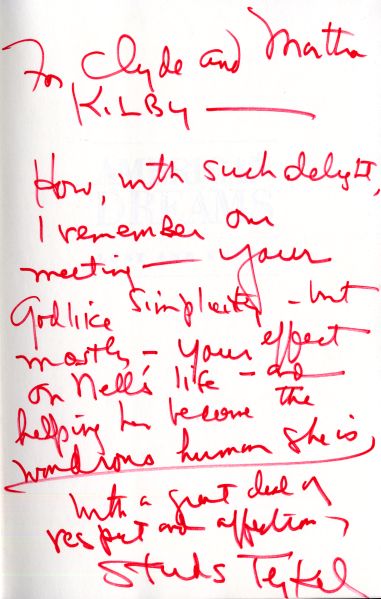
Siegel was a student and close friend of Dr. Clyde Kilby, Wheaton College professor of English who founded the Marion E. Wade Center, containing the manuscripts of C.S. Lewis, J.R.R. Tolkien and five other British writers. At Harvard, Siegel studied under poet Robert Lowell, winner of the Pulitzer Prize. Aside from the world of letters, Siegel was also a naturalist, laboring for land preservation. In 1989 he published an article in the Atlantic Monthly, drawing attention to the imminent razing of Henry Thoreau’s property for a housing development. His effort was successful.

Siegel’s poetry and fiction garners praise from diverse quarters:

Of Robert Siegel’s talents there can be no doubt. “Brilliant” is a term too casually applied today, and it does not begin to define the remarkable range of subjects delineated and the technical mastery demonstrated…His poems are a power. ~ Joseph Parisi, Poetry magazine

The poet’s extraordinary gift for metaphor allows him to reveal a range of emotions and attitudes that is rare among contemporary poets. ~ Booklist

Siegel’s imagination is excited by the nonhuman world, and he writes about plants and animals with surprising immediacy…A compassionate observer…he looks at them as mysterious and wonderful signs of a greater order. ~ Dana Gioia, in Poetry magazine

Whalesong is one of those rare and wondrous things, a book which is born a classic. ~ Madeleine L’Engle, author of A Wrinkle in Time

A masterful work combining mythology, philosophy and poetry in a story that is exciting and convincing. ~ Richard Eberhart on the Whalesong trilogy

It is all here — everything your imagination longs for when it travels back beyond our sad and gritty history to the high and noble ages of which we mortals get only fleeting and heartbreaking glimpses in the tales we now call myths. Siegel is a bard, and that is a genius almost as rare nowadays as the centaurs. ~ Thomas Howard on Alpha Centauri

Robert Siegel composed and read the inaugural poem, “In My Beginning is My End,” at the 2010 installation ceremony of Dr. Philip Ryken, eighth president of Wheaton College. His papers (SC-11), comprising correspondence and manuscripts, are housed in the Wheaton College Special Collections, are available to researchers.

God So Loved

This Christmas meditation, written by V. Raymond Edman, originally appeared as a tract called “Meet Mr. Scrooge,” published by Moody Press.

Ebeneezer Scrooge. Who has not met him? To be sure, he never really existed except in Dickens’ A Christmas Carol, one of the most delightful Christmas stories ever told. Scrooge is so vividly portrayed that his name has become a part of our language. Since we first learned about him, we have known every stingy old miser as a scrooge. But our acquaintance with him may be superficial. We meet so many characters in Dickens’ immortal story that we may fail to follow Mr. Scrooge to the end, and the conclusion is the real point and climax of the tale. We are intrigued by Marley’s ghost with his clanking chains. We are pleased with the cheerful nephew of Ebenezer who at first had no warming influence on his greedy old uncle. We are stirred by Bob Cratchit and his delightful family, especially Tiny Tim with his enthusiastic word, “God bless us every one!”

Then there are those ghosts, each with a message to Scrooge. The Ghost of Christmas Past brought back the recollection of happy schooldays and the reminder of merry Christmas Eves of long past when Scrooge was an apprentice in the office of old Fezziwig. There was even the reminder of an old love affair that never materialized. The bittersweet nostalgia of the yesterdays! The Ghost of Christmas Present took the old skinflint to the happy scenes in the humble Cratchit home the preparation for dinner, the arrival of Father Bob and his little crippled son from the church service, the gratitude of all for God’s goodness despite Bobs poor wages. A delightful scene in merry old England! But the Ghost of Christmas Future had only sadness for Scrooge. The Cratchit home was silent and tearful, and Tiny Tim, who might have lived had there been money for medical help, was no longer there. From there the Ghost took the penitent and fearful Scrooge to a deserted cemetery and pointed to a solitary grave marked with the name Ebenezer Scrooge.

No, never! How could he ever face the dismal and doleful prospect pictured in that headstone? As Scrooge poured out his protest and clung to the arm of the Ghost Future, he came to consciousness, clinging to the bedpost in his own room. It had all been a dream. But life is not a dream. It is very real. For us there is the memory of yesterday’s Christmases with the message: “God so loved the world, that he gave his only begotten Son, that whosoever believeth in him should not perish, but have everlasting life” (John 3:16). We have today, and the Bible reminds us, “Now is the accepted time; behold, now is the day of salvation” (II Cor. 6:2). “Believe on the Lord Jesus Christ, and thou shalt be saved” (Acts 16:31). For the future the Bible goes on to say, “It is appointed unto men once to die, but after this the judgment” (Heb. 9:27). The time to prepare for that certainty is right now.

Meet Mr. Scrooge.
Meet yourself.
Of course you are not the stingy, grasping old miser of A Christmas Carol, but like him you face the prospect that ahead lies the grave and the beyond! Like old Scrooge, you can be transformed, not by New Year’s resolutions but by becoming a child of God in receiving the Lord Jesus Christ. Then the present takes on joy and new meaning, and you can face the future unafraid! “As many as received him, to them gave he power to become the sons of God” (John 1:12).

Rev. John Timothy Stone and Wheaton College

Fourth Presbyterian Church, situated directly across from Hancock Tower, is a Gothic limestone anachronism amid the sleek high rise condos, trendy shops and high-tech offices of downtown Chicago. Displaying spire, cloisters, fountain, gabled roof and stained glass windows depicting biblical scenes, Fourth Presbyterian, designed by renowned architect Ralph Adams Cram, presents an austere dignity to Michigan Avenue. Since its founding in 1871, the old church has seen a succession of qualified ministers occupy its pulpit. Among these was the gifted Reverend John Timothy Stone, Fourth’s seventh pastor. Stone had been serving at Brown Memorial Church in Baltimore when he finally accepted Fourth Presbyterian’s persistent invitation, officially installed by the presbytery in 1909. Under his leadership the church’s lay ministries greatly increased as his eloquence attracted swelling crowds. In 1928 Stone was elected as acting president of Presbyterian Theological Seminary (now McCormick Theological Seminary), assuming full-time duties in 1930. Situated so prominently, Stone interacted with the chief ecclesiastical figures of the era, including Dr. J. Oliver Buswell, then-president of Wheaton College, who had in 1918 received his divinity degree from the seminary. These were transitional years not only for Stone and Buswell in their roles as college educators, but the battle between theological “modernists” and conservatives was just beginning to heat up, boiling toward a crisis which would shiver institutions and divide loyalties. According to historian Ovid R. Sellers, “The theological controversy which threatened to split the Presbyterian Church in the USA during the twenties had no repercussions on the McCormick campus.” This assertion is not quite accurate, as seen in the following correspondence.

Relations between Buswell and Stone began cordially, each occasionally inviting the other to Chicago or Wheaton for a friendly lunch. However, Buswell in 1930 explains his hesitance in advising ministerial candidates to attend Presbyterian Theological Seminary. The issue, he writes, is that he had recently heard a lecture at the seminary delivered by a Professor Hays, seemingly mounting a “virulent attack upon the doctrine of the infallibility of the Bible..,” in addition to advancing an “un-Presbyterian” appeal to the “inner light.” Buswell had also heard from several witnesses that a Professor Frank was teaching doctrines “strongly opposed to evangelical standards in theology.” Further, he feels that Stone has “misrepresented me as a loyal alumnus of McCormick Seminary.”

Stone replies graciously, including written responses from Hays and Frank. “Please dismiss from your mind any spirit other than cordial toward Wheaton College or toward yourself,” he writes, hoping to disarm Buswell and put the matter to rest.

Unconvinced, Buswell is far from finished. In his response, dated November 1, 1932, he bluntly challenges Stone’s alleged good cheer toward Wheaton College:

A considerable number of Wheaton students and graduates have told me directly and at different times of statements made by yourself and by other members of your faculty reflecting upon me and upon Wheaton College. I was told within the past month of a remark which you made to one of our graduates slurringly referring to me as a disloyal alumnus. Another member of your faculty some time ago referred to my direct and straightforward criticism as “throwing mud as his Alma Mater.”

He goes on to address Hays and Frank’s objections to his criticism of their theology, reiterating his suspicions that these teachers are, indeed, liberal in their appeals to authoritative sources beside the Bible, and disparages their suggestions that the Old Testament prophets, along with Jesus, simply re-packaged existing pagan customs to suit their immediate ministerial needs.

Buswell, summing up, informs Stone that he is too busy to fully respond to all his concerns, but will do so when he returns from an engagement in Buffalo. He writes somewhat threateningly, “I am wondering whether it is not my duty to prepare an article, making my position in regard to the seminary as clear as possible. I do not like to be called a disloyal alumnus or one who throws mud on his Alma Mater, without having it known that I have sufficient reason for my criticism.”

Stone’s reply, if such exists, is missing from the record; but history demonstrates that Wheaton College anchored herself largely to the right of the theological center, as McCormick bobbed ever leftward.